
The MENA Forex Broker Opportunity in 2026: UAE, Egypt, Saudi Arabia, and Where to Launch
Why MENA is the fastest-growing region for new forex brokers in 2026 — client demographics, regulatory paths, IB network structure, and which markets are most accessible for new operators.
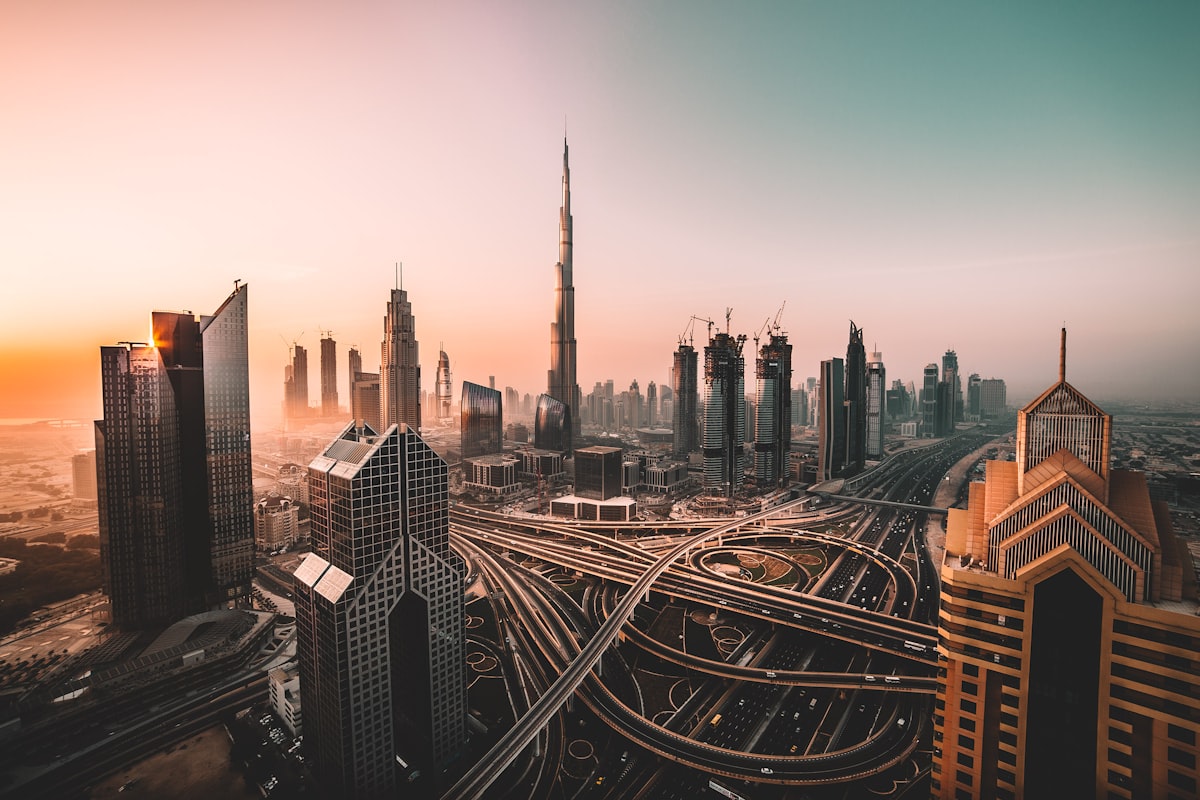
Photo: Christoph Schulz / Unsplash
MENA retail forex is the most significant growth story in the industry in 2026. The conditions that drive volume — young demographics, high mobile penetration, deep cultural familiarity with currency trading, and the rapid development of credible local regulatory frameworks — are producing the fastest-growing pool of new retail traders anywhere in the world.
For new broker operators, this represents a specific opportunity: the IB infrastructure exists, the client demand is real and growing, and the established international brokers have largely built for Western or Asian markets, leaving service gaps in Arabic-speaking markets that a well-positioned new entrant can fill. This post maps the landscape — which markets, what regulatory path, how the IB model works in MENA, and what a broker targeting this region needs to get right.
Why MENA Is Different From Other Markets
The MENA retail forex market has several structural characteristics that distinguish it from European, American, or Southeast Asian markets:
Large average deposits. UAE-based traders deposit $3,000–$8,000 on average first deposit — significantly higher than the $200–$500 common in Southeast Asian mass-market retail. Gulf clients with oil industry, real estate, or finance backgrounds regularly open accounts at $10,000–$50,000. The LTV per client is materially higher than most other retail markets.
IB-driven trust networks. Retail forex adoption in MENA is heavily IB-mediated. Traders in Egypt, Saudi Arabia, UAE, and Pakistan predominantly open accounts through an IB recommendation — a local trading educator, a community leader, or a Telegram channel with a trusted trading signals track record. Cold marketing to MENA retail traders is expensive and low-converting. IB network development is not an optional channel in MENA — it is the primary channel.
Islamic finance requirements. In markets where the majority population practises Islam — Saudi Arabia, Egypt, UAE, Pakistan, Bangladesh, Indonesia — swap-free account availability is a baseline requirement. Swap-free accounts eliminate overnight interest charges, replacing them with a non-interest administrative fee structure that complies with Islamic principles. A broker that does not offer swap-free accounts is effectively excluding the majority of the MENA retail market. This is a common oversight by brokers launching without MENA-specific research.
Arabic-language expectation. English-language-only platforms and support are a significant conversion barrier in Egypt, Saudi Arabia, and the Levant. UAE is more bilingual, but Arabic-language marketing materials, platform localisation, and customer support are competitive differentiators in every MENA market. The brokers who build Arabic-language content, Arabic-language IB materials, and Arabic-speaking customer support convert MENA leads at materially higher rates than English-only operators.
The MENA Market by Country
UAE — Highest Value, Growing Regulation
The UAE is the premium MENA forex market. Dubai's position as a global financial centre has produced a sophisticated investor class with high disposal income and a long history of currency trading. Average first deposits are the highest in the region.
Regulatory landscape: the UAE Securities and Commodities Authority (SCA) regulates forex brokers operating in onshore UAE. The Dubai Financial Services Authority (DFSA) regulates entities operating within the DIFC free zone. Both are credible, internationally respected regulators. SCA licensing is appropriate for most retail brokers targeting UAE residents; DFSA is for operators seeking institutional relationships and the DIFC brand.
Many brokers currently serve UAE clients through Seychelles FSA entities without a UAE license. The regulatory risk in this approach is rising — the SCA has been increasing enforcement activity against unlicensed brokers marketing to UAE residents. For a serious UAE presence targeting 2026 and beyond, SCA licensing is increasingly the right path. UAE regulatory capital requirement: $500,000+. Timeline: 6–12 months.
Egypt — Largest Population, High Growth
Egypt has the largest Arabic-speaking population in the world — 110 million people — and a rapidly growing retail trading community. Forex trading culture is well-established; Egyptian IBs are among the most active in the MENA region, operating large Telegram channels and YouTube accounts with Arabic-language trading education.
Average deposits are lower than UAE ($300–$1,000) but volume is high. An Egyptian IB with 50,000 followers can refer 100–200 depositing clients per month. The broker regulation question is simpler in Egypt: Egyptian retail clients can trade through Seychelles or other offshore-licensed brokers without restriction, and the Egyptian Financial Regulatory Authority (FRA) primarily regulates domestic institutions rather than offshore brokers serving retail clients. The Seychelles FSA path works well for Egypt.
Saudi Arabia — High Value, Restricted Access
Saudi Arabia has one of the highest per-capita incomes in the world and a large population of high-value retail forex traders. Direct marketing from unlicensed brokers to Saudi residents is restricted, but Saudi traders routinely open accounts with offshore-licensed brokers through IB relationships. The access route is typically: UAE-licensed broker (SCA) + Saudi IBs referring Saudi clients.
Building Saudi volume requires Saudi or Gulf IB relationships. These are high-value IBs — the traders they refer have large accounts and high trading frequency — but they are selective about which brokers they partner with. Regulatory credibility (Seychelles FSA at minimum, SCA preferred), reliable payouts, and platform quality are the qualifying criteria.
Nigeria — Africa's Largest Market
Nigeria sits technically outside MENA but is deeply connected to MENA trading networks and IB infrastructure. With 220 million people, a strong IB culture, and significant remittance activity that builds currency familiarity, Nigeria is one of the fastest-growing retail forex markets in the world. Average deposits are modest ($100–$500) but volume is high and growing rapidly. Seychelles FSA is well-accepted by Nigerian traders and IBs. The primary access route is crypto payment processing (USDT dominates) and IB-driven acquisition through local trading communities on Telegram and WhatsApp.
What to Build for MENA
A broker serious about MENA acquisition needs to have the following in place before active marketing:
Swap-free account type: Configure a swap-free account structure in the platform back-office with a flat administrative fee instead of overnight swap. ST Trader supports this natively. Without it, you cannot credibly serve the majority of MENA retail traders.
Arabic platform localisation: The ST Trader client portal supports Arabic-language configuration. Broker-facing marketing materials — onboarding emails, IB guides, promotional assets — should be produced in Arabic for Egyptian, Saudi, and Levantine markets.
MENA IB programme: Commission structure, multi-tier hierarchy support, and a payout mechanism that works for MENA IBs (USDT/USDC preferred for payment, given banking complexities in some markets). Identify 10–20 target IBs in Egypt and UAE in the first 30 days and begin relationship development before the platform is live.
Crypto payment processing: USDT and USDC are the dominant deposit and withdrawal methods in Nigeria, Egypt, Pakistan, and increasingly UAE. Crypto rails are available from launch — no PSP onboarding required. In many MENA markets, crypto is not just convenient but necessary, as card processing for forex is restricted or unavailable for traders in certain countries.
Regional customer support: An Arabic-speaking customer support capability — even a single person in the early stage — converts leads more effectively and retains traders better than English-only support.
Why MENA Is the Right First Market for Many New Operators
The combination of high average deposit values, strong IB infrastructure, accessible regulatory paths (Seychelles FSA covers the majority of target markets), and underserved demand makes MENA the most attractive first market for most new broker operators in 2026. The established brokers have built for Western or Asian markets. The MENA IB networks are actively looking for credible broker partners who offer competitive commission, reliable platform infrastructure, and Arabic-language support.
If you are evaluating a MENA launch — which markets to prioritise, what regulatory structure to use, how to build the IB network, and how to configure the platform for the region — book a call. This is one of our specialities.
Frequently Asked Questions
Why is MENA the fastest-growing forex market in 2026?
Several structural factors: a young, financially literate population with high mobile penetration; significant remittance-driven familiarity with currency exchange; Islamic finance structures (swap-free accounts) that make forex accessible to the majority Muslim population; growing middle-class wealth seeking investment vehicles; and regulatory development (particularly in UAE) that has attracted credible brokers and legitimised the industry. MENA retail forex volumes grew approximately 35% year-over-year in 2024–2025 and are projected to continue at 25–30% through 2026.
Which MENA countries are best for a new forex broker to target?
UAE: highest deposit sizes ($2,000–$10,000+ average first deposit), SCA and DFSA regulation available, sophisticated IB infrastructure. Egypt: largest population in the Arab world, rapidly growing retail trading community, lower average deposits but high volume. Saudi Arabia: large wealthy population, regulatory restrictions but strong demand, often accessed through UAE-licensed entities. Nigeria: technically West Africa but strongly connected to MENA trading networks; high growth, underserved by credible brokers. Pakistan and Bangladesh: strong remittance culture, IB-driven acquisition, very price-sensitive market.
Do I need a UAE license to operate in the UAE market?
For retail marketing activity specifically targeting UAE residents, SCA (Securities and Commodities Authority) or DFSA (Dubai Financial Services Authority, for DIFC-based entities) authorisation is required. However, many brokers serve UAE-based clients through Seychelles FSA licensed entities without a UAE license, relying on a 'reverse solicitation' framework (client-initiated rather than broker-solicited). This grey area is narrowing as UAE regulation matures — the risk of enforcement against unlicensed brokers marketing to UAE residents is higher in 2026 than in 2022. For a serious UAE presence, SCA licensing is increasingly necessary.
What is the average forex trader deposit in MENA?
UAE: $3,000–$8,000 average first deposit, often $10,000+ for Gulf-based clients with oil industry or finance backgrounds. Egypt: $300–$1,000 average, with high-volume traders at $2,000–$5,000. Saudi Arabia (accessed indirectly): $2,000–$5,000 average. Regional average across MENA broadly: $800–$2,000. MENA deposits are materially higher than Southeast Asian or Eastern European markets, which is why client LTV is more attractive despite similar acquisition costs.
How important are swap-free (Islamic) accounts in MENA?
Extremely important. In markets with a majority Muslim population — Saudi Arabia, Egypt, UAE, Pakistan, Bangladesh, Indonesia — swap-free (Islamic) account availability is not a differentiator, it is a requirement. Traders who practise Islamic finance cannot pay or receive interest (riba), which means standard overnight swap charges make forex accounts impermissible under Islamic law. Swap-free account structures replace the overnight interest with an administrative fee model. ST Trader supports native swap-free account configuration. Any broker serious about MENA must have this in place before marketing to the region.
How do IB networks work in MENA?
MENA IB networks are typically hierarchical: a master IB recruits sub-IBs, who recruit traders. The master IB earns from their own referrals plus a percentage of sub-IB volume. Multi-tier structures are standard. IBs in MENA often operate Telegram channels, WhatsApp groups, or YouTube channels in Arabic, with local trading signals and analysis that build community trust. The top MENA IBs manage communities of 10,000–100,000 followers and generate significant broker revenue. Finding and retaining these IBs — through competitive commission, reliable payouts, and platform quality — is the most important commercial activity for a broker targeting MENA.
Ready to launch? Book a free consultation.
Talk through your setup, jurisdiction, and infrastructure with our team — no obligation, no sales pitch, just practical advice.
Book a free consultation